
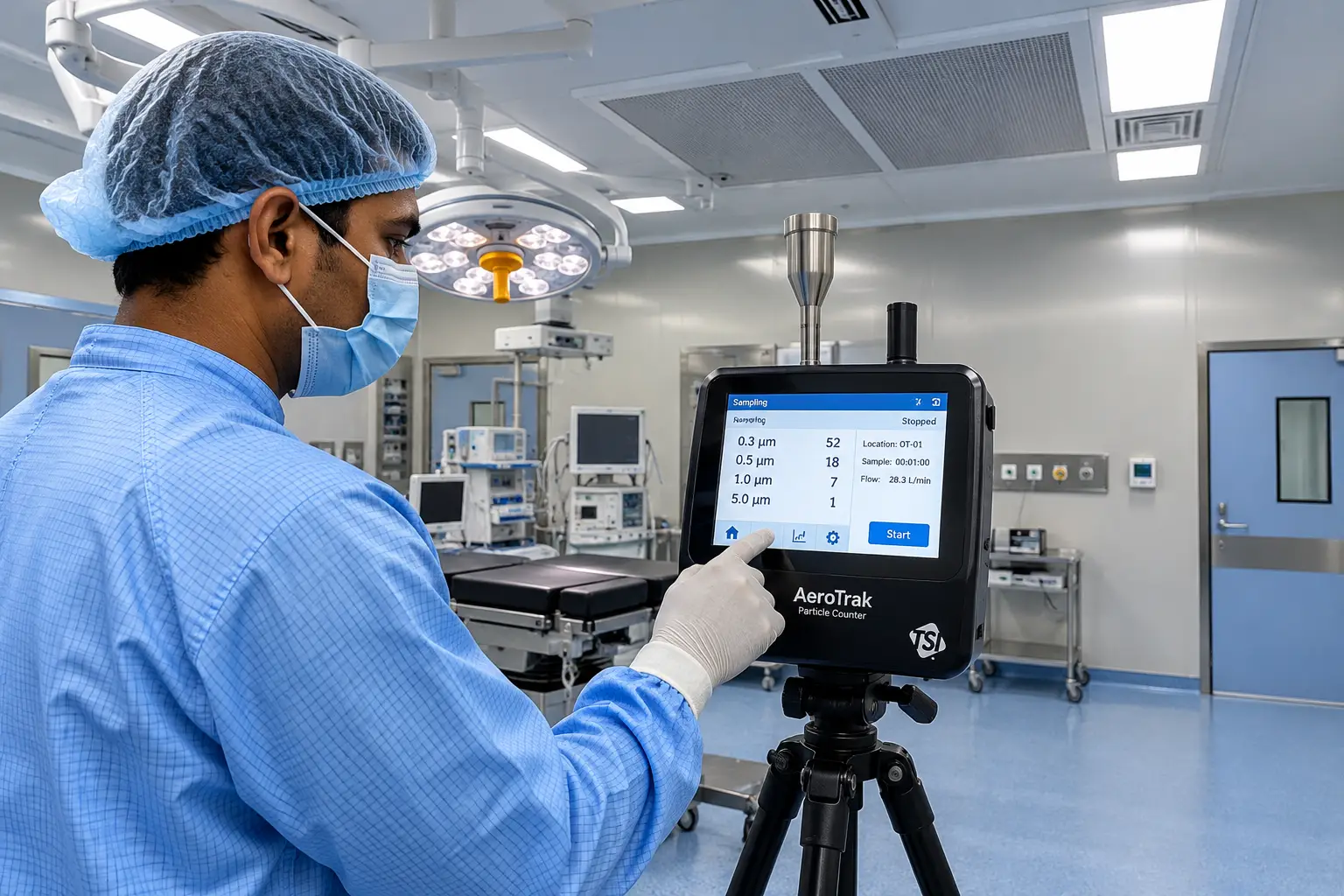
OT & IVF Lab Validation: Complete Guide to Testing, Qualification & Healthcare Compliance
Introduction: Why OT & IVF Lab Validation Is Essential
Operation Theatres (OTs) and In Vitro Fertilization (IVF) Laboratories are among the most critical environments in modern healthcare facilities. These specialized areas require controlled environmental conditions to support patient safety, infection prevention, and reliable clinical and laboratory operations.
Even a well-designed Modular Operation Theatre or IVF Laboratory cannot be considered fully qualified based on installation alone. Its ventilation system, filtration performance, environmental parameters, and operational controls must be evaluated through appropriate testing and validation procedures.
OT & IVF Lab Validation is a documented process used to verify whether the facility and its supporting systems perform according to approved design specifications, applicable standards, and defined acceptance criteria.
At Dventure, we understand the importance of properly designed and qualified healthcare environments. Our focus is on supporting healthcare infrastructure through engineering solutions for Modular OTs, IVF Laboratories, HVAC systems, and related installations.
What Is Operation Theatre (OT) Validation?
Operation Theatre Validation involves evaluating critical environmental and engineering parameters to determine whether the OT meets its specified performance requirements.
A properly functioning OT ventilation system helps control airborne contamination, maintain suitable temperature and humidity, and support the required airflow direction between adjoining spaces.
OT validation may include the following activities:
- Air Velocity and Airflow Measurement
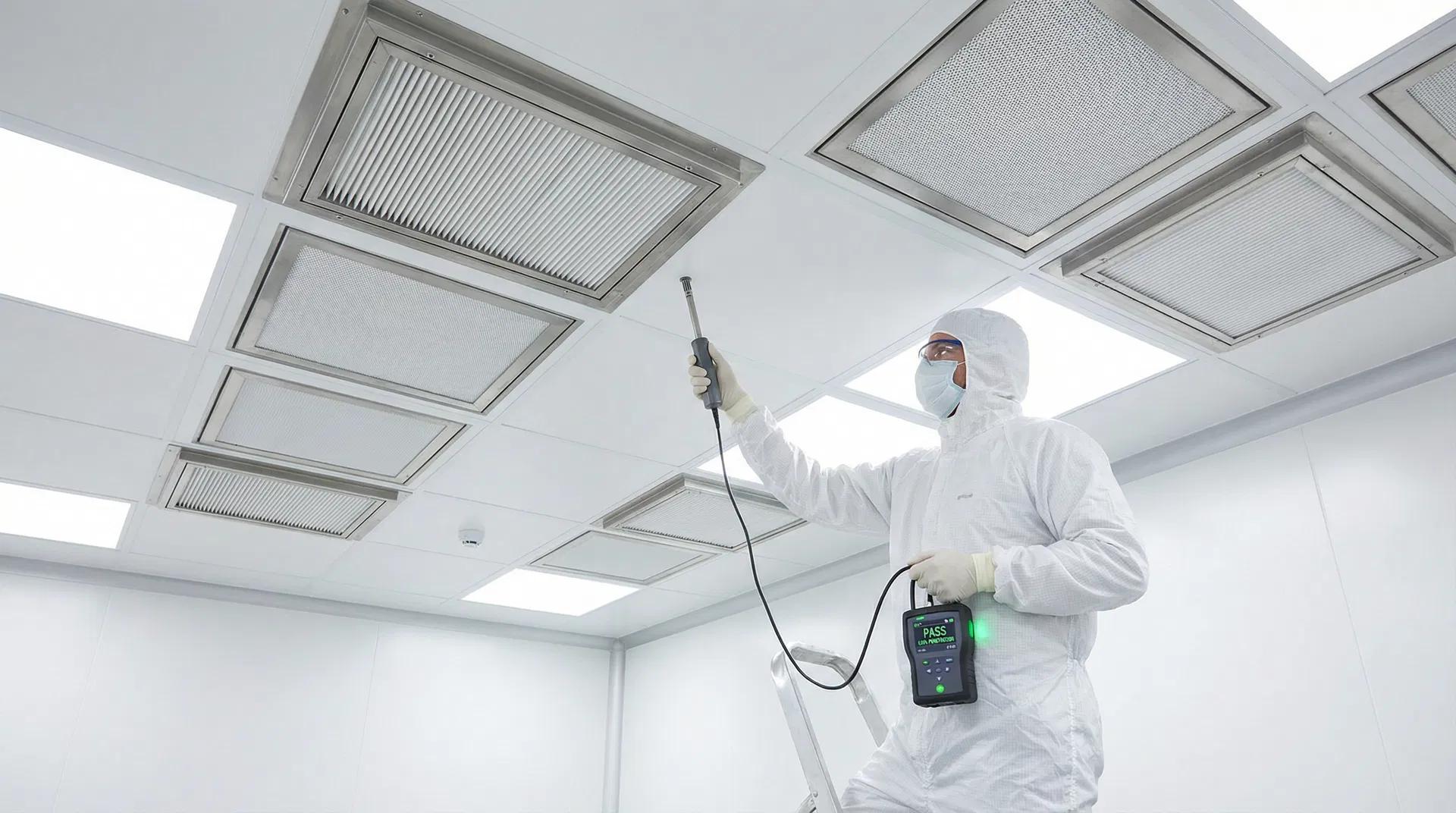
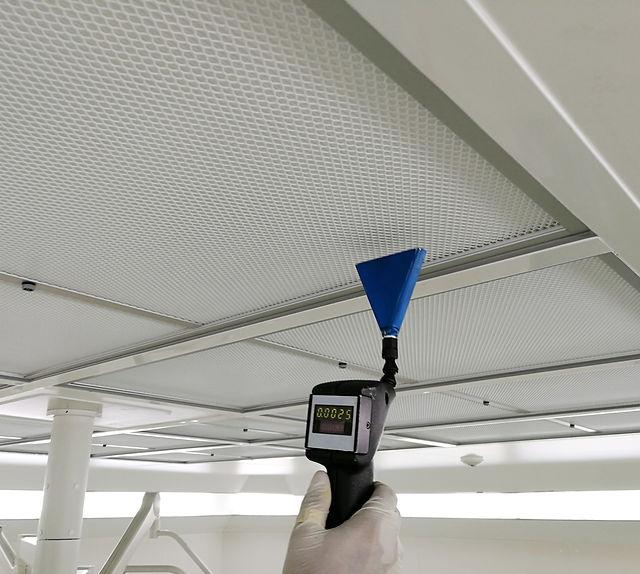
- HEPA Filter Integrity Testing
- Airborne Particle Count Testing
- Room Pressure Differential Measurement
- Temperature and Relative Humidity Monitoring
- Air Change Rate Verification
- Airflow Visualization and Direction Testing
- Recovery Testing, where required
The testing scope depends on the OT classification, clinical procedures, applicable requirements, and approved project specifications.
Importance of Modular OT Validation
Modular Operation Theatres are designed using specialized wall panels, ceilings, doors, lighting systems, and controlled ventilation arrangements.
However, the installation of these components does not automatically confirm environmental performance.
Validation helps identify problems such as inadequate airflow, damaged filters, incorrect room pressure relationships, or unsuitable temperature and humidity control.
Benefits of OT Validation
1. Infection Prevention Support
Appropriate ventilation and filtration can help reduce airborne contamination risks when combined with effective infection prevention practices.
2. HVAC Performance Verification
Testing confirms whether the installed HVAC system achieves the specified airflow and environmental conditions.
3. Documentation for Quality Reviews
Validation reports provide objective records that can support hospital quality management, audits, and accreditation-related reviews.
4. Early Detection of Engineering Issues
Testing can reveal problems before routine clinical use or following significant maintenance activities.
5. Improved Operational Reliability
Periodic performance checks help facilities identify deterioration in critical environmental controls.
What Is IVF Laboratory Validation?
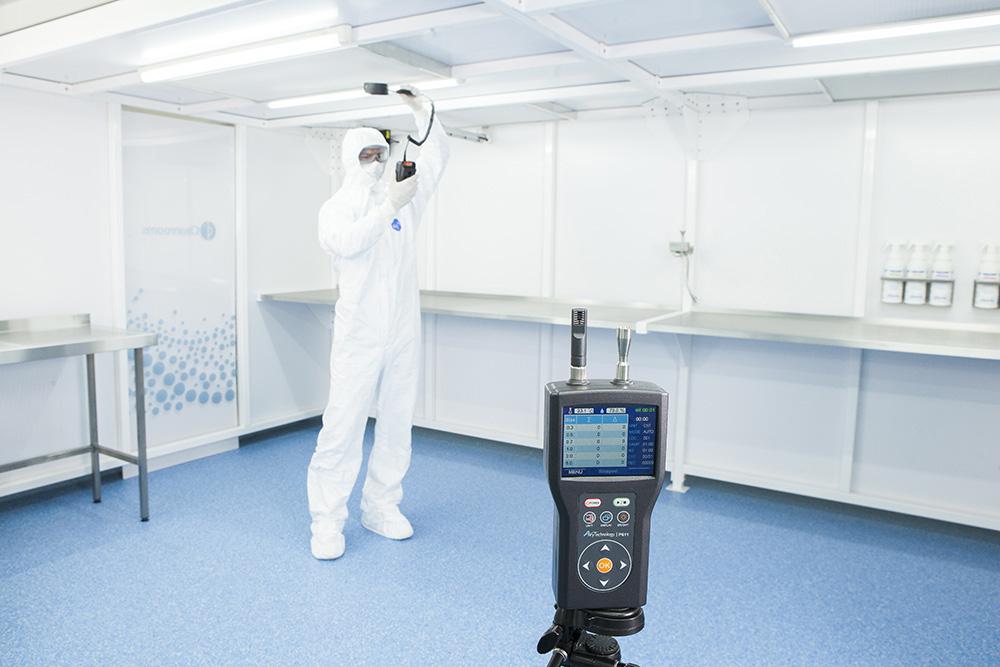
An IVF Laboratory is a highly specialized environment where sensitive reproductive cells and embryos are handled under carefully controlled conditions.
Environmental stability is particularly important because laboratory procedures can be affected by temperature fluctuations, airborne particles, chemical contaminants, and inappropriate airflow conditions.
IVF Lab Validation is the process of verifying that the laboratory environment and relevant engineering systems meet predefined performance requirements.
Unlike general healthcare areas, IVF laboratories may require additional attention to volatile organic compounds (VOCs), chemical filtration, equipment conditions, and laboratory-specific operational practices.
Key Parameters Tested During IVF Lab Validation
1. Airborne Particle Count Testing
Airborne particle counting is performed to assess the concentration of suspended particles within the laboratory environment.
Testing may be conducted using calibrated particle-counting equipment at selected sampling locations.
Where an ISO cleanroom classification is specified, the classification methodology and acceptance limits should follow the applicable edition of ISO 14644-1.
Particle classification alone does not establish microbiological cleanliness or VOC suitability.
2. HEPA Filter Integrity Testing
High-Efficiency Particulate Air (HEPA) filters are commonly used in controlled healthcare environments.
Integrity testing helps identify leakage through the filter media, frame, seals, or installation arrangement.
The test procedure should be selected according to the installed filtration system, relevant standards, and approved validation protocol.
3. Temperature and Humidity Validation
Temperature and relative humidity are important environmental parameters in both OT and IVF laboratory facilities.
Testing helps determine whether the HVAC system can maintain the specified conditions during defined operating states.
For IVF laboratories, room environmental conditions must also be coordinated with incubators, workstations, and other critical equipment.
There is no single temperature or humidity value that is universally suitable for every OT or IVF laboratory. Acceptance criteria must be established for the particular facility.
4. Differential Pressure Testing
Differential pressure measurement determines the pressure relationship between adjoining rooms or zones.
Appropriate pressure relationships can help control the movement of airborne contaminants.
However, the required pressure cascade depends on the facility design, risk assessment, door arrangements, and applicable requirements.
Pressure readings should be compared with approved design values rather than arbitrary universal limits.
5. Air Changes per Hour (ACH) Verification
Air Changes per Hour represents the theoretical number of times a room’s air volume is supplied or replaced over one hour.
It can be calculated as:
ACH = (Airflow Rate in m³/hour) ÷ Room Volume in m³
For example, if a room has a volume of 100 m³ and receives 2,000 m³/hour of supply air, the calculated ACH is 20.
The required ACH depends on the type of healthcare space and its governing design criteria.
ACH alone does not demonstrate effective contaminant removal because airflow distribution and ventilation effectiveness also matter.
6. Airflow Visualization Testing
Airflow visualization helps assess the movement of air within controlled environments.
It can reveal undesirable turbulence, short-circuiting, or airflow patterns that may transport contaminants toward critical work areas.
For IVF laboratories, airflow patterns should also be assessed in relation to biological safety cabinets, laminar-flow workstations, and other sensitive equipment.
7. VOC and Chemical Contamination Assessment
IVF laboratories may require special attention to volatile organic compounds and other chemical contaminants.
Potential sources include construction materials, adhesives, cleaning products, furnishings, and external air pollution.
Where required, appropriate chemical air-quality assessments and filtration performance checks should be incorporated into the qualification program.
HEPA filtration is intended for particulate removal and should not be assumed to remove gaseous VOCs.
OT & IVF Lab Validation: Key Differences
| Validation Parameter | Modular OT | IVF Laboratory |
|---|---|---|
| Airflow Measurement | Important | Important |
| HEPA Filter Integrity | As specified | As specified |
| Particle Count Testing | Based on classification | Based on classification |
| Temperature Monitoring | Required by design | Critical for laboratory control |
| Humidity Monitoring | Required by design | Important for environmental stability |
| Pressure Differential | Based on pressure cascade | Based on laboratory design |
| VOC Assessment | Risk-based | Particularly important |
| Equipment Qualification | OT-specific equipment | Incubators, workstations and related equipment |
Both environments require documented testing, but their acceptance criteria and operational risks are not identical.
Step-by-Step OT & IVF Lab Validation Process
A structured validation program generally includes several stages.
Step 1: Design Qualification (DQ)
Design Qualification reviews whether the proposed facility design meets defined user requirements and applicable technical criteria.
This may include HVAC capacity, filtration arrangements, room layouts, environmental specifications, and system controls.
Step 2: Installation Qualification (IQ)
Installation Qualification verifies whether the installed systems and components correspond to approved drawings, specifications, and equipment documentation.
Step 3: Operational Qualification (OQ)
Operational Qualification evaluates whether the installed systems operate correctly under specified conditions.
Activities may include functional checks, alarm verification, airflow testing, filter integrity testing, and environmental measurements.
Step 4: Performance Qualification (PQ)
Performance Qualification evaluates whether the facility consistently meets its intended performance requirements under defined operating conditions.
The precise DQ, IQ, OQ, and PQ structure should be adapted to the project’s validation framework.
Step 5: Documentation and Reporting
Following testing, the validation team prepares documented results and identifies any deviations from approved acceptance criteria.
A validation report may contain:
- Project and room identification
- Test procedures and applicable references
- Instrument details and calibration status
- Recorded measurements
- Approved acceptance limits
- Pass/fail assessments
- Deviations and corrective-action recommendations
- Authorized review and approval
A validation certificate should only be issued with an appropriate conclusion supported by actual test evidence.
OT & IVF Lab Validation Standards in India
Healthcare facilities in India may need to consider requirements and guidance from several sources, depending on their scope and intended use.
These can include:
NABH: Applicable hospital accreditation standards and infection prevention requirements.
ISO 14644: Relevant cleanroom classification and testing standards where cleanroom requirements are specified.
ASHRAE 170: A healthcare ventilation reference where adopted by the project specification or relevant authority.
ICMR and applicable ART regulations: Relevant requirements and guidance for assisted reproductive technology facilities.
Manufacturer Requirements: Equipment-specific installation, operational, and environmental specifications.
It is important to understand that these references do not automatically impose identical requirements on every OT or IVF laboratory. The applicable editions, local regulations, and facility-specific acceptance criteria should be established before validation begins.
When Should OT & IVF Lab Validation Be Performed?
Validation or requalification may be appropriate:
- Before commissioning a new OT or IVF laboratory
- Following significant HVAC modifications
- After HEPA filter replacement or major maintenance
- Following room renovation or changes to critical airflow arrangements
- At defined periodic intervals based on risk assessment and facility policy
- When environmental monitoring identifies unexplained performance issues
The required frequency should be determined by the facility’s risk assessment, applicable standards, and quality management procedures.
Why Choose Dventure for OT & IVF Lab Infrastructure?
At Dventure, our healthcare engineering focus includes Modular Operation Theatres, IVF Laboratory infrastructure, HVAC systems, and related healthcare facility solutions.
We understand that successful healthcare infrastructure requires more than the installation of panels, filters, and air-conditioning equipment. It requires careful coordination between design, installation, environmental performance, documentation, and ongoing maintenance.
Our engineering-oriented approach emphasizes:
- Healthcare-specific HVAC planning
- Modular OT and IVF Lab infrastructure solutions
- Airflow and filtration considerations
- Coordination of environmental control requirements
- Quality-focused installation practices
- Support for testing and commissioning planning
Project-specific validation and testing services should be confirmed with our team based on the facility’s technical requirements.
Frequently Asked Questions (FAQs)
Is OT validation mandatory for every hospital?
The applicable testing and documentation obligations depend on local regulations, accreditation requirements, facility policies, and the type of operation theatre. Hospitals should verify the requirements relevant to their facilities.
Is IVF Lab Validation different from OT Validation?
Yes. Although both involve environmental controls, IVF laboratories have additional considerations related to embryos, gametes, chemical contaminants, and specialized laboratory equipment.
Does HEPA filter installation guarantee cleanroom performance?
No. HEPA filter installation alone does not establish cleanroom performance. Appropriate integrity testing, airflow verification, particle testing, and other required qualification activities may be necessary.
Can validation be performed while a facility is operational?
Some measurements can be performed during normal operations, depending on the test method and clinical or laboratory safety requirements. Other tests may require the room to be unoccupied or temporarily taken out of service.
What is included in an OT or IVF Lab validation report?
A report typically includes testing methods, equipment details, recorded results, specified acceptance criteria, deviations, and an overall technical conclusion.
Conclusion
OT & IVF Lab Validation is an essential part of responsible healthcare infrastructure management.
From HEPA filter integrity testing and airflow verification to temperature monitoring, pressure differential measurement, and cleanroom qualification, each activity helps determine whether the facility performs according to its intended design.
For hospitals, fertility centers, and healthcare project developers, a properly planned validation program supports environmental control, operational reliability, and documented quality assurance.
Dventure – Building World-Class IVF Labs & Modular Operation Theatres.
Looking for professional healthcare infrastructure solutions?
Visit: www.dventure.co.in
Contact Dventure to discuss your Modular OT, IVF Laboratory, HVAC, and project-specific validation requirements.
